Refrigerator · Water dispenser not working
No Water Reaching the Ice Maker: Supply Line, Inlet Valve, and Filter
Updated
When the ice maker is switched on, the freezer is cold, and the mold still comes up dry, the fault is somewhere in the water path. That path is short and you can test it end to end without special tools.
The same chain feeds the door dispenser, which is the most useful diagnostic you have: whether the dispenser still works tells you immediately where to look.
Before you open anything: unplug the refrigerator and close the water shut-off valve behind it or under the sink. An ice maker circuit carries mains voltage and a live water line, and a fill valve that opens while the unit is apart will empty onto the floor.
Start with the dispenser
- Dispenser works, ice maker gets nothing — water is reaching the refrigerator, so the shut-off valve and supply line are fine. The fault is downstream: the ice maker branch of the inlet valve, or the fill tube that runs into the freezer.
- Neither works — the problem is upstream and common to both: the household shut-off, the supply line, a clogged filter, or the inlet valve as a whole.
- Both are weak or slow — restriction rather than blockage. Filter first, then line pressure.
The supply chain, in order
1. Household shut-off valve. Under the sink or behind the refrigerator. Confirm it is fully open. A valve that was closed for an unrelated plumbing job and never fully reopened is an easy miss.
2. Supply line. Pull the refrigerator out far enough to see the line without stretching it. Look for a kink where the cabinet was pushed back against it, and for a section that has frozen — a line routed through the door or against the freezer wall can ice up internally and pass nothing while looking perfectly normal from outside.
3. Water filter. Filters restrict as they load, and a filter well past its interval starves the ice maker before the dispenser noticeably slows, because the ice maker draws a smaller, slower volume. If the filter is old, replace it before condemning anything electrical. Some models will bypass the filter with the housing removed — if flow returns with the filter out, you have your answer.
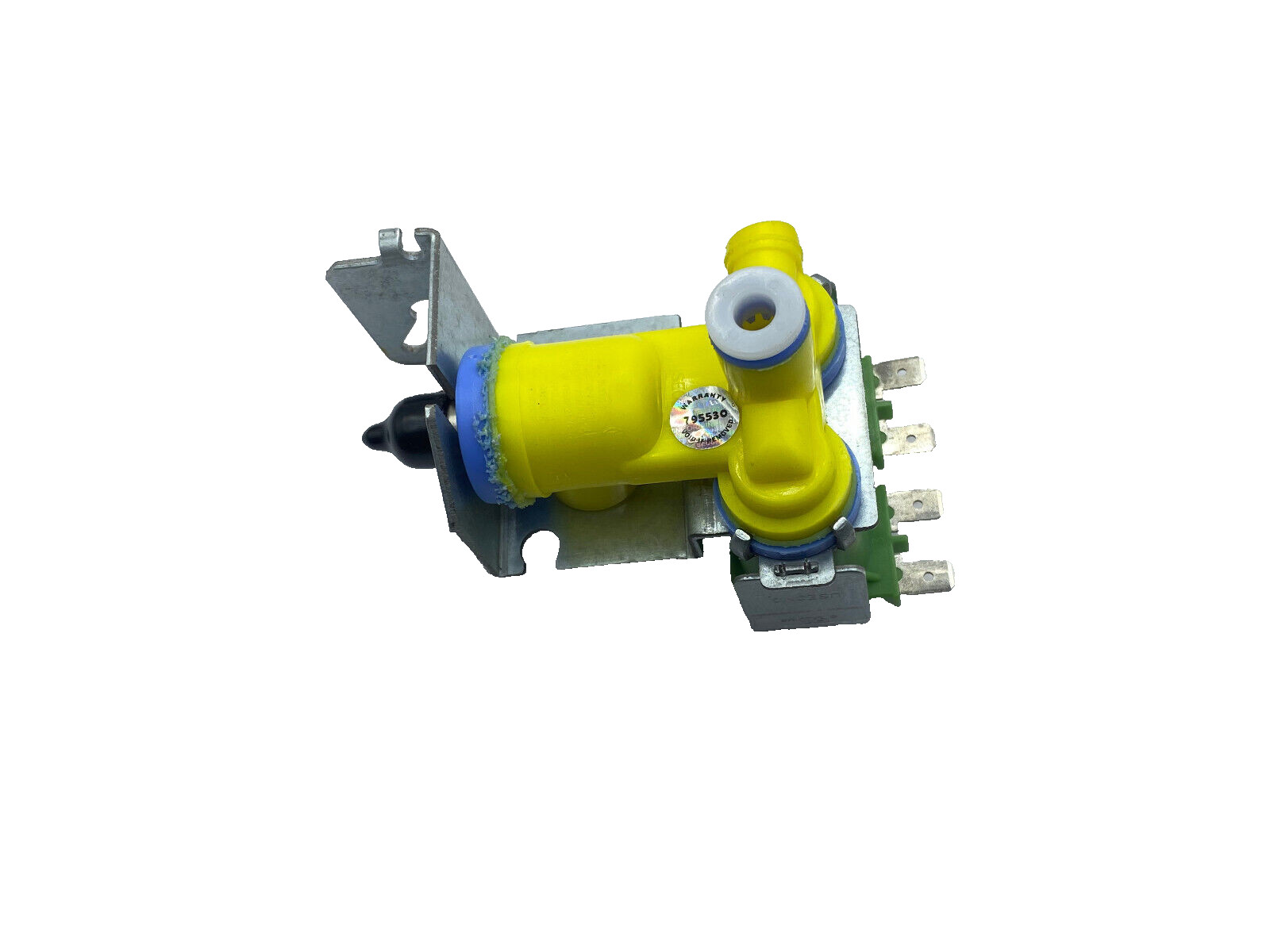
4. Inlet valve. This is the electrically operated valve at the back of the cabinet where the household line connects. Most refrigerators with both ice and water use a dual valve — one solenoid for the dispenser, one for the ice maker — which is precisely why one can fail while the other keeps working. A valve that hums but passes nothing, or that passes nothing and stays silent, is the part.
5. Fill tube. The short tube that carries water from the valve into the freezer and over the mold. It can freeze solid, usually as a consequence of a slow leak or a weak fill that dribbles instead of pours. Thawing it clears the symptom, but if the underlying valve is weak it will simply freeze again.
Water pressure matters
Inlet valves need a minimum supply pressure to open and seat properly — most manufacturers specify around 20 psi. Homes on a well, or on a line shared with a reverse-osmosis system, can sit below that. If the dispenser flow is visibly weak throughout the house, the refrigerator is reporting a plumbing condition, not a refrigerator fault.
What a new valve will not fix
If the mold fills correctly but the ice never harvests, water is not your problem — that is the ice maker module or the freezer temperature. Confirm you actually have a fill failure before ordering a valve.
Before you order the part
Ice maker components are model-specific, and manufacturers change them mid-production — two refrigerators that look identical from the outside can take different assemblies. The model plate is your only reliable source. On most refrigerators it is on the inside wall of the fresh-food compartment, near the crisper drawers.
Ask us before you install. Send us the full model number and we will confirm fit before you buy — that is what our fit check is for, and it costs you nothing. Once a part has been installed we can only take it back if it arrived defective, we shipped the wrong item, or the listing was wrong on our end, and it has to come back in the condition it went out in. Checking first is faster than returning.